
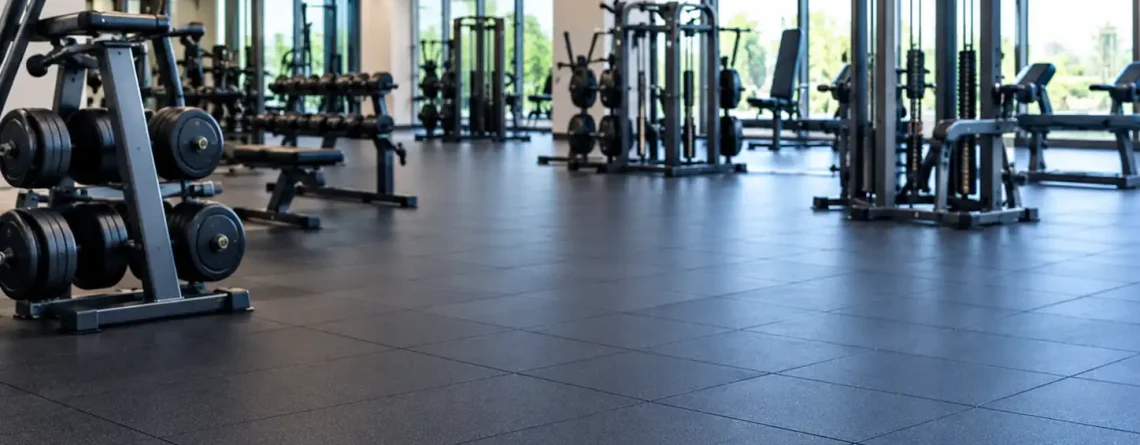
Best Flooring for Commercial Gyms in Qatar: A Complete Buyer’s Guide
Choosing the Best Flooring for Commercial Gyms in Qatar decides how safe, quiet and profitable your training floor will be for years. Qatar’s heat, humidity, dust and heavy daily footfall punish weak surfaces fast. A floor that cracks, curls or turns slippery becomes a liability for members and a repair bill for owners.
Many operators spend months choosing machines and almost no time on what sits underneath them. That is a costly mistake. Flooring protects equipment, reduces noise, lowers injury risk and shapes the first impression of your space.
This guide covers materials, thicknesses, zone-by-zone choices and installation steps. It is written for gym owners, hotel and resort managers, facility managers, school and university administrators, contractors and investors planning a new or upgraded facility.
Why Your Gym Floor Is a Business Decision, Not an Afterthought
A gym floor does four jobs at once. It absorbs impact, grips under sweat, protects the subfloor and controls noise. When one job fails, the others suffer.
In Qatar the stakes are higher. Air-conditioned gyms still face dust, moisture from cleaning, heavy equipment deliveries and long operating hours. Hotels and towers add another layer, because guests expect a polished space and neighbours expect low noise.
The right floor delivers:
- Lower joint stress during running, jumping and lifting
- Protection for concrete from dropped plates and dumbbells
- Reduced noise in hotels, towers and mixed-use buildings
- Easier cleaning and longer equipment life
- A professional look that supports membership value
Every successful commercial gym flooring Qatar project starts with one principle: match the surface to the activity, not to the cheapest quote.
Best Flooring for Commercial Gyms in Qatar: Material Options Compared
Several materials compete for your budget. Each has a place, but not all of them survive heavy commercial use.
Gym Rubber Flooring Qatar Facilities Rely On
Rubber is the standard for serious training floors. Dense rubber tiles and rolls resist impact, hold their shape under racks and handle constant traffic. Recycled rubber is cost-effective, while EPDM-flecked finishes add colour and a cleaner look.
Rolls suit large open areas because they leave fewer seams. Interlocking tiles make repairs easier. Rubber gym mats Doha buyers often start with are fine for stretching corners, but a commercial facility needs full-coverage flooring, not loose mats that shift and leave gaps.
Foam, PVC and Vinyl Alternatives
Foam tiles are light and cheap, but they compress and tear under machines. PVC and vinyl look sleek and suit studios or reception-adjacent areas. However, they can turn slick when wet and rarely survive heavy free-weight use. Use them selectively, not across the whole facility.
Fitness Centre Flooring Qatar: Matching Surfaces to Training Zones
The best flooring for commercial gyms in Qatar is rarely one product. It is a zoned system, where each area gets the specification it needs.
Weightlifting Platform Flooring for Free-Weight Areas
Lifting areas need the toughest surface. Weightlifting platform flooring usually combines a dense rubber base with a timber or composite insert, giving lifters a stable, level surface for Olympic lifts. Surrounding zones need thick rubber to absorb dropped bars.
Plan racks, benches and flooring together to avoid rework. This buyer’s guide to benches and racks for commercial gyms in Qatar explains clearances that affect floor layout.
Cardio Zone Flooring
Treadmills, bikes and ellipticals need a level, moderately cushioned surface that limits vibration and noise. Thinner rubber works well here. Flooring works best alongside a smart plan, so review these cardio zone layout ideas for commercial gyms in Qatar before finalising your floor map.
Functional and Group Training Areas
Functional floors face jumping, sled pushes and kettlebell swings. Choose medium-thickness rubber or turf here, and keep a separate sprung floor for dance and aerobics.
Heavy-Duty Gym Flooring: Thickness and Density Guide
Treat thickness as part of the Best Flooring for Commercial Gyms in Qatar decision, not a standalone specification. Density, surface finish and subfloor preparation matter equally. As general guidance for commercial projects:
- Cardio areas: about 8 to 10 mm rubber
- Strength and free-weight zones: about 15 to 20 mm
- Lifting platforms and drop zones: 20 mm or thicker, often with a platform insert
- Studios and stretching areas: 6 to 8 mm rubber or specialist studio flooring
Confirm exact specifications with your supplier against your heaviest equipment and likely drop height. Heavy-duty gym flooring should also be checked for compression, tear strength and odour, because low-grade recycled rubber can smell strongly in enclosed rooms.
Shock-Absorbing Gym Floors and Anti-Slip Gym Flooring for Safety
Safety is the strongest argument for investing properly. Shock-absorbing gym floors reduce load on knees, hips and lower backs during plyometrics and heavy lifting. Anti-slip gym flooring keeps footing secure when members sweat or cleaners leave moisture behind.
Check these features before approving samples:
- A textured surface that grips both shoes and bare feet
- Consistent density with no soft spots
- Tight seams that prevent tripping
- Resistance to cleaning chemicals
- Fire and slip performance documents where your project requires them
Hotels, schools and universities should confirm compliance requirements with their consultants early.
Gym Flooring Installation Qatar: What Good Execution Looks Like
Even premium material fails on a poor subfloor. A reliable installation follows a clear process:
- Survey the site and map equipment loads.
- Prepare the subfloor so it is clean, dry and level.
- Add moisture barriers or underlay where needed.
- Lay rolls or tiles with tight seams and the correct adhesive.
- Cut edges neatly around columns, drains and doors.
- Allow full curing time before loading equipment.
Schedule flooring before equipment delivery. Installing machines first forces teams to lift heavy units twice, which slows the project and risks damage.
How to Choose Gym Flooring Suppliers Qatar Buyers Can Trust
The supplier matters as much as the product. Look for a partner who treats the best flooring for commercial gyms in Qatar as a system of material, subfloor and installation. Ask these questions:
- Do they supply and install, or only sell materials?
- Can they provide physical samples and technical data?
- Do they understand how your equipment interacts with the floor?
- What warranty and after-sales support do they offer?
- Have they completed hotels, schools, clubs and commercial gyms?
Sports Village has supplied commercial fitness equipment in Qatar since 2006, serving hospitals, schools, universities, gyms and health clubs, and its range includes rubber flooring. Sourcing equipment and floors from one team simplifies planning and accountability. Explore the full range on the Sports Village Qatar home page.
Maintenance Tips to Protect Your Flooring Investment
Maintenance protects the best flooring for commercial gyms in Qatar from early wear. Qatar’s fine dust makes routine care essential.
- Sweep or vacuum daily
- Damp mop with a pH-neutral cleaner
- Avoid harsh solvents and oil-based products
- Wipe spills immediately
- Use pads under heavy equipment feet
- Inspect seams and edges every quarter
Frequently Asked Questions
What is the Best Flooring for Commercial Gyms in Qatar?
Dense rubber tiles or rolls, specified by thickness for each training zone, suit most commercial gyms. They combine durability, grip, noise control and easy cleaning.
How thick should rubber flooring be in a commercial gym?
Cardio areas typically use about 8 to 10 mm, free-weight zones about 15 to 20 mm, and lifting platforms 20 mm or more. Confirm with your supplier.
Is rubber flooring suitable for hotel and resort gyms?
Yes. Rubber reduces impact noise, resists heavy use and suits air-conditioned spaces. Hotels should also check fire and slip documentation.
How long does gym floor installation take?
It depends on the area, subfloor condition and curing time. A site survey gives the most accurate timeline.
Can foam mats replace commercial gym flooring?
Not for heavy use. Foam compresses and tears under machines and weights, so reserve it for light stretching areas.
Final Thoughts on the Best Flooring for Commercial Gyms in Qatar
Investing in the best flooring for commercial gyms in Qatar protects members, equipment and your budget. Choose dense rubber, match thickness to each zone, prepare the subfloor properly and work with an experienced supplier.
A well-planned floor keeps your gym safe, quiet and professional long after opening day.
Get a Free Flooring Consultation
Sports Village
Building No 86, Street 340, Zone 39
Near Jarir Book Store, Ramada Signal
Salwa Road, Doha, Qatar
Email: info@sportsvillageqatar.com


LEAVE A COMMENT