
Types of Gym Flooring Explained
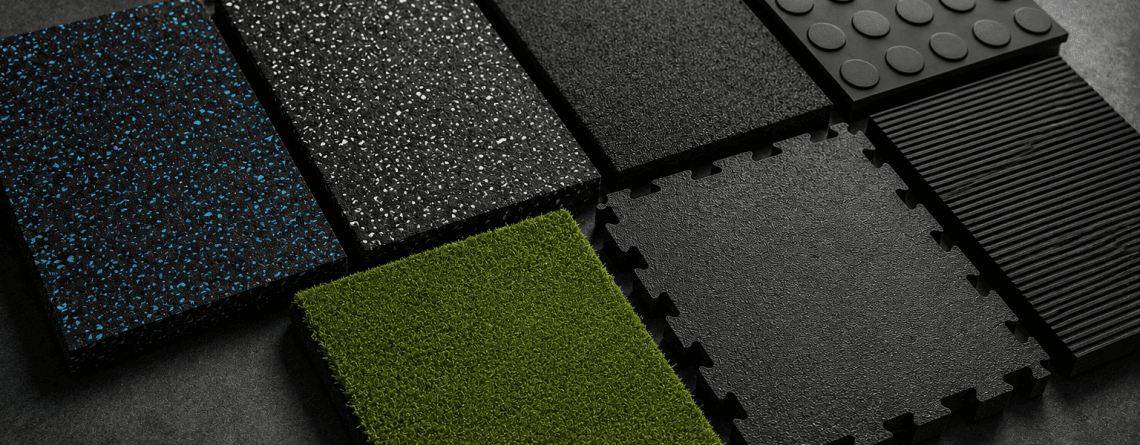
The main types of gym flooring are rubber rolls, rubber tiles, rubber mats, artificial turf, vinyl, foam tiles, and hardwood. Each type serves a different training zone: rubber for free weights and machines, turf for functional training, vinyl for studios, and foam for light home use. Choosing the right combination protects your floor, your equipment, and your members.
At Sports Village Qatar, we have planned and installed gym flooring for commercial gyms, hotels, schools, and home gyms across Doha since 2006. This guide explains every major flooring type, where each one belongs, and how to choose the right option for your facility.
Rubber Rolls: The Commercial Gym Standard
Rubber rolls are large continuous sheets of rubber flooring, typically supplied in long rolls and glued or loose-laid across the entire gym floor. Rubber rolls create a seamless, professional finish with very few joints, which makes them the first choice for large commercial facilities.
Rubber rolls suit main gym floors, machine zones, and cardio areas. Because the surface is continuous, dirt and moisture cannot collect between pieces, and cleaning is fast. Installation requires professional handling due to the weight and precision involved, which is why Sports Village Qatar includes expert installation with every flooring project.
Best for: commercial gyms, hotel fitness centres, large facilities, cardio and machine zones.
Rubber Tiles: Flexible and Easy to Replace
Rubber tiles are square sections of rubber flooring, usually interlocking or glue-down, available in multiple thicknesses and colours. Rubber tiles deliver the same protection as rolls but with one major advantage: if a single tile is damaged, you replace that tile only, not the whole floor.
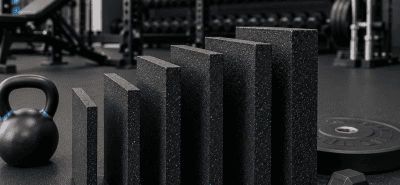
Tiles also allow creative layouts. Many gyms use coloured tiles to mark training zones, walkways, or branded areas. Thicker tiles of 15mm to 20mm work well under racks and free weight sections where dropped weights are constant.
Best for: free weight areas, medium-sized gyms, facilities that want zone marking or easy future repairs.
Rubber Mats: Targeted Heavy-Duty Protection
Rubber mats are individual heavy-duty pieces placed exactly where the hardest impacts happen — under squat racks, deadlift platforms, and plate-loaded machines. Mats are the thickest rubber option available, often 20mm and above, and they absorb the extreme forces of Olympic lifting.
Mats are also the simplest entry point for home users. A few quality mats under a rack and bench protect villa tiles and marble without a full installation. Best for: lifting platforms, squat racks, home gyms, physiotherapy rooms.
Artificial Turf: Built for Functional Training
Artificial gym turf is a synthetic grass surface designed for sled pushes, agility drills, lunges, and functional training. Turf provides grip and a forgiving surface that supports explosive movement without damaging knees or equipment.
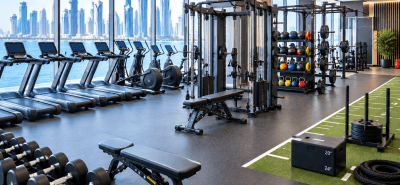
Most modern commercial gyms in Qatar now dedicate a turf strip or functional zone alongside their commercial gym equipment layout. Turf lanes typically run 10 to 20 metres and are often marked with distance lines for sprint and sled work.
Best for: functional training zones, sled lanes, CrossFit-style areas, sports performance facilities.
Vinyl Flooring: Studios and Multi-Purpose Rooms
Vinyl gym flooring is a smooth, resilient surface used in group exercise studios, yoga rooms, and multi-purpose halls. Vinyl is comfortable underfoot, easy to sanitise, and available in wood-look finishes that give studios a premium appearance.
Vinyl is not designed for free weights — dropped dumbbells will dent it — but for aerobics, dance, yoga, and Pilates studios it delivers the right balance of grip, glide, and comfort. Many hotels choose vinyl for their wellness and studio rooms and rubber for the main gym floor.
Best for: group exercise studios, yoga and Pilates rooms, dance floors, wellness spaces.
Foam Tiles: Light Home Use Only
Foam interlocking tiles are the budget-friendly option many home users start with. Foam is soft, lightweight, and easy to install, which makes it fine for bodyweight exercise, stretching, and light dumbbell work.
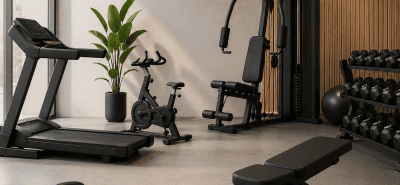
However, foam compresses permanently under heavy equipment and tears under racks and machines. For any serious home gym setup with a treadmill, multi-station, or free weights, rubber tiles or mats are the safer long-term investment. Foam is a starting point, not a destination.
Best for: kids’ play areas, stretching corners, very light home workouts.
Hardwood Flooring: Courts and Specialty Studios
Hardwood gym flooring is the classic surface for basketball courts, squash courts, and traditional aerobics studios. Wood offers excellent energy return and a premium look, but it is expensive, sensitive to moisture, and requires ongoing maintenance — a real consideration in Qatar’s air-conditioned, humidity-controlled environments.
Hardwood belongs in sports halls and specialty studios, not in weight rooms. Schools and sports clubs often combine a hardwood court with rubber-floored fitness rooms in the same facility.
Best for: basketball and multi-sport courts, school sports halls, premium dance studios.
How to Choose the Right Gym Flooring
Choosing gym flooring comes down to four questions. What activities happen in each zone? How heavy is the equipment? How much traffic will the floor take daily? And what is the building situation — ground floor concrete or an upper floor above hotel rooms or apartments?
Most complete facilities use a combination: rubber rolls or tiles across the main floor, thick mats under lifting stations, turf for the functional lane, and vinyl in the studio. Sports Village Qatar supplies premium flooring from Ecore USA and Paviflex Spain, and our free 3D gym design service maps every flooring zone before installation begins — so you see the complete layout before a single roll is laid.
Frequently Asked Questions
What is the best type of flooring for a gym?
Rubber flooring is the best all-round choice for gyms because it protects the subfloor, absorbs impact, reduces noise, and handles heavy equipment. Rubber rolls suit large commercial floors, tiles suit free weight zones, and thick mats suit lifting platforms. Most gyms combine rubber with turf and vinyl for specific zones.
What thickness of gym flooring do I need?
Cardio and machine areas need 6mm to 8mm flooring. Free weight zones need 10mm to 15mm. Olympic lifting and deadlift areas need 20mm or more to absorb dropped barbells. Sports Village Qatar assesses your equipment layout and recommends the correct thickness for every zone before installation.
Is foam flooring good enough for a home gym?
Foam flooring works only for bodyweight training, stretching, and very light weights. Under treadmills, racks, or heavy dumbbells, foam compresses and tears quickly. For a lasting home gym in Qatar, rubber tiles or heavy-duty rubber mats are the better investment and still affordable for villa and apartment gyms.
Where can I buy gym flooring in Qatar?
You can buy all types of gym flooring in Qatar from Sports Village Qatar, the authorised supplier of Ecore USA and Paviflex Spain. We supply rubber rolls, tiles, mats, and turf with free delivery and professional installation for commercial gyms, hotels, schools, and homes across Doha and all of Qatar.
Not sure which flooring combination your gym needs? Sports Village Qatar supplies every major flooring type — with free delivery, expert installation, and a free 3D gym design service that plans your zones before you spend a riyal.
Get a Free Flooring Consultation
Sports Village Qatar Building No 86, Street 340, Zone 39, Near Jarir Book Store, Ramada Signal, Salwa Road, Doha, Qatar Phone: +974 44501166 | +974 55156973 Email: info@sportsvillageqatar.com




LEAVE A COMMENT