

How Fitness Improves Employee Productivity: A Guide for HR Leaders
How fitness improves employee productivity is a question every HR manager weighing a workplace wellness investment eventually has to answer with real evidence, not just good intentions. Understanding exactly how fitness improves employee productivity matters more than ever as Doha businesses compete harder for talent and grapple with rising healthcare costs. This guide breaks down the research, the practical benefits, and how to design a program that genuinely moves the needle.
The Real Connection Between Fitness and Workplace Performance
Understanding how fitness improves employee productivity starts with recognizing that physical activity isn’t separate from cognitive performance — it’s directly linked to it. Regular exercise increases blood flow to the brain, supports better sleep quality, and reduces the chronic stress that quietly erodes focus and decision-making over time.
Employees who exercise regularly consistently report higher energy levels throughout the workday, fewer sick days, and better ability to manage high-pressure situations without burning out. For HR leaders building a business case, this isn’t a soft benefit — it’s a measurable driver of output.
The Business Case: Fitness ROI Workplace Programs Deliver
Building a fitness ROI workplace case starts with understanding where the returns actually show up. This is really the practical heart of how fitness improves employee productivity for most organizations — a well-designed employee fitness program typically delivers value across several concrete areas:
Reduced absenteeism — Physically active employees generally take fewer sick days, since regular exercise supports stronger immune function and better stress management, both of which reduce illness-related absences.
Lower healthcare costs — Companies investing in employee wellness often see reduced long-term healthcare expenditure, since preventive fitness reduces the likelihood of costly chronic conditions developing over time.
Higher retention — In competitive labor markets like Doha, workplace wellness benefits genuinely influence where skilled employees choose to work and how long they stay.
Improved focus and output — Employees who take movement breaks or exercise regularly report sharper concentration and better task completion compared to sedentary counterparts, further illustrating how fitness improves employee productivity on a day-to-day basis.
Employee Wellness Program Benefits Beyond the Bottom Line
While cost savings matter for the business case, employee wellness program benefits extend into culture and morale in ways that are harder to quantify but equally important. A visible investment in employee health signals genuine care from leadership, which tends to strengthen loyalty and workplace satisfaction beyond what compensation alone achieves.
Team-based fitness activities also build stronger interpersonal relationships across departments — shared physical challenges create camaraderie that translates into better collaboration on actual work projects.
Corporate Fitness Programs: What Actually Works
Not every corporate fitness program delivers equal results. The programs that genuinely move productivity metrics tend to share a few characteristics:
- Accessibility — On-site or nearby facilities remove the biggest barrier to consistent participation: time and travel friction
- Variety — Options spanning strength training, cardio, and flexibility work accommodate different fitness levels and preferences across a diverse workforce
- Flexibility — Programs that fit around work schedules, rather than demanding rigid attendance, see meaningfully higher long-term engagement
- Leadership participation — When managers and executives visibly participate, employee buy-in increases significantly
Workplace Wellness Doha: Local Context Matters
Designing workplace wellness Doha businesses can rely on means factoring in Qatar’s specific climate and lifestyle realities. Extreme summer heat makes outdoor fitness impractical for much of the year, which is exactly why indoor, climate-controlled office fitness spaces carry outsized value in this market compared to more temperate regions.
Companies in Doha increasingly recognize this — investing in dedicated indoor fitness spaces rather than relying on outdoor activity options that simply aren’t usable for several months annually. This local reality shapes how fitness improves employee productivity differently in Qatar than in cooler climates.
Employee Fitness Program Design: A Practical Framework
Designing an effective employee fitness program design doesn’t require an enormous budget or a full-scale gym from day one. A practical, phased approach works well for most organizations:
1. Start with a needs assessment. Survey employees about interest levels, preferred activity types, and realistic time availability before investing in equipment or space.
2. Choose accessible, low-barrier options first. A modest office fitness corner with basic cardio and strength equipment often drives higher participation than an ambitious but underused full gym.
3. Build in scheduling flexibility. Allow employees to use facilities during breaks or flexible windows rather than forcing rigid class times that conflict with work demands.
4. Track participation and outcomes. Simple metrics — attendance, self-reported energy levels, sick day trends — help demonstrate how fitness improves employee productivity in your specific organization over time.
5. Scale based on actual usage. Expand equipment or programming based on what employees genuinely use, rather than guessing at demand upfront.
Office Fitness Space: What to Include
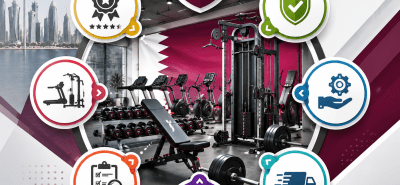
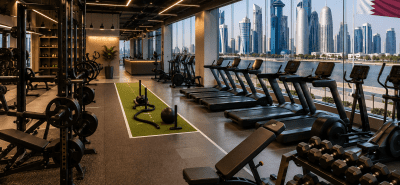
For companies ready to invest in a dedicated office fitness space, a well-planned setup typically balances a few core elements without overcomplicating the design:
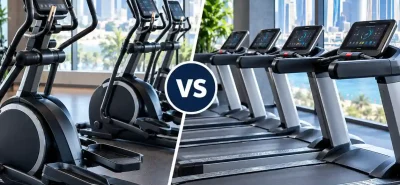
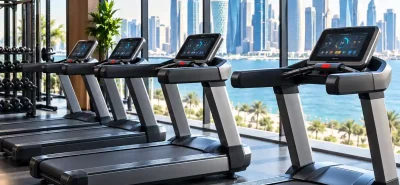
- A compact cardio zone — treadmills or bikes suited to shorter, break-time sessions
- Basic strength equipment — a multi-gym machine or free weights accommodate a range of fitness levels in limited space
- Proper flooring and ventilation — especially important in Qatar’s climate, where indoor comfort directly affects usage
- Simple, functional layout — over-designing early often wastes budget on features employees don’t actually use
Corporate Wellness Investment: Making the Case to Leadership
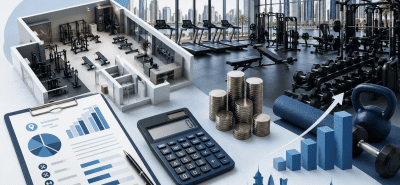
When presenting a corporate wellness investment proposal, HR leaders get the strongest traction by pairing the human benefits with concrete business metrics. Framing the investment around reduced absenteeism, improved retention in a competitive Doha job market, and measurable productivity gains resonates far more with decision-makers than wellness framed purely as a perk — and demonstrating how fitness improves employee productivity with real internal data strengthens that case considerably.
The Bottom Line
How fitness improves employee productivity comes down to a straightforward chain: physical activity supports better sleep, lower stress, and sharper cognitive function, which together translate into fewer sick days, stronger retention, and measurably better day-to-day output. For HR leaders in Doha building the case for a workplace fitness program, the evidence supports treating this as a genuine business investment, not just an employee perk.
Frequently Asked Questions
Q1: How much does an employee fitness program typically cost?
Costs vary widely based on scope — a basic office fitness corner with essential equipment costs significantly less than a full-scale gym, and many companies start small and scale based on employee usage.
Q2: Does employee fitness actually reduce healthcare costs?
Yes — companies with active wellness programs often see reduced long-term healthcare expenditure, since regular exercise supports better immune function and reduces the likelihood of costly chronic health conditions. This is one of the clearest data points showing how fitness improves employee productivity translates into real savings.
Q3: What’s the easiest way to start a corporate fitness program?
Start with an employee needs assessment, then invest in a modest, accessible setup — basic cardio and strength equipment often drives stronger participation than an ambitious but underused facility.
Q4: How does Qatar’s climate affect workplace wellness planning?
Extreme summer heat makes outdoor fitness impractical for much of the year, making indoor, climate-controlled office fitness spaces particularly valuable in the Doha market.
Q5: How do I measure the ROI of an employee fitness program?
Track absenteeism trends, participation rates, and employee retention over time — these metrics, alongside self-reported energy and focus improvements, help demonstrate ongoing business value to leadership.
Ready to design a workplace fitness space your team will actually use? Explore our office gym design guide or browse our corporate gym equipment range with Sports Village Qatar — trusted for corporate and institutional projects across Doha since 2006.
Sports Village Qatar
📞 +974 4450 1166 | ✉️ info@sportsvillageqatar.com
📍 Building No 86, Street 340, Zone 39, Near Jarir Book Store, Ramada Signal, Salwa Road, Doha, Qatar



LEAVE A COMMENT