
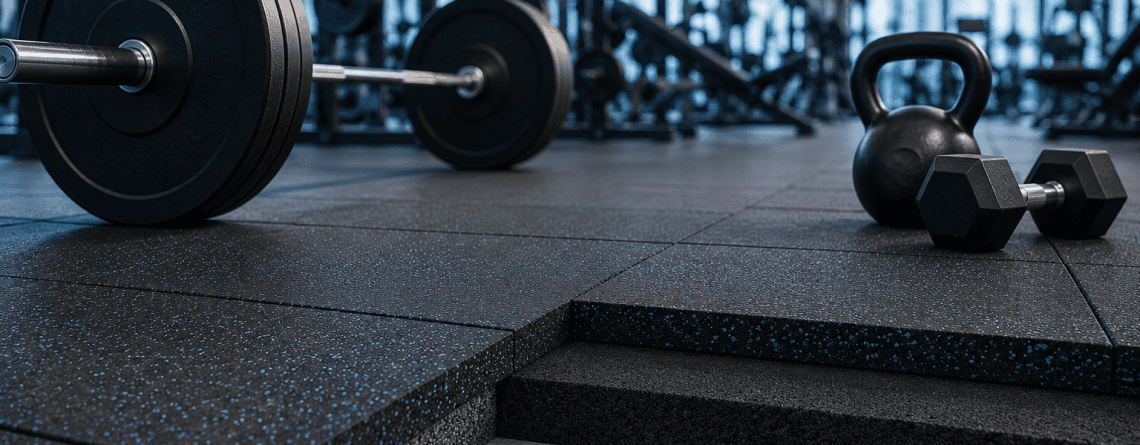
How Thick Should Gym Flooring Be?
Drop a loaded barbell on the wrong flooring, and you’ll find out fast whether you chose correctly — usually the hard way, with a cracked tile or a damaged subfloor. That’s exactly why how thick should gym flooring be is one of the most important questions to answer before you buy a single tile.
Whether you’re building a home gym corner, outfitting a commercial weight room, or designing a CrossFit box, flooring thickness directly affects safety, noise levels, equipment lifespan, and long-term maintenance costs.
This guide breaks down exactly what thickness you need for every type of training zone, so you can make a confident, informed decision the first time.
Why Gym Flooring Thickness Matters More Than You Think
Many gym owners treat flooring as a cosmetic afterthought, focusing on color and appearance rather than function. But flooring is fundamentally a protective system — it absorbs impact, reduces noise, and prevents damage to both equipment and the structure beneath it.
Getting the gym flooring thickness guide right from the start saves significant money long-term, since undersized flooring cracks, wears out quickly, and often requires costly replacement within just a year or two of heavy use.
For a complete breakdown of material options alongside thickness, our guide on choosing the right gym flooring in Qatar covers everything from rubber types to installation standards.
Best Gym Flooring Thickness for Weights: The Core Rule
The heavier the equipment and the higher the drop risk, the thicker your flooring needs to be. Understanding the best gym flooring thickness for weights by zone prevents both under-spending and over-spending.
General Thickness Guidelines by Zone
| Zone/Use Case | Recommended Thickness |
|---|---|
| Cardio and stretching areas | 6mm–10mm |
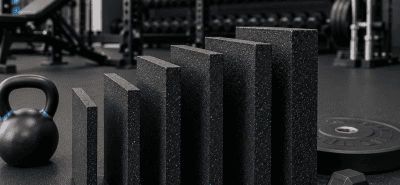
| General free weight areas | 20mm–30mm |
| Heavy weightlifting zones | 30mm–40mm |
| Deadlift and Olympic lifting platforms | 40mm–80mm |
These ranges reflect the actual impact force different activities generate, from light dumbbell use to maximal barbell drops.
Rubber Gym Flooring Thickness: Why Rubber Is the Standard
Rubber gym flooring thickness matters because rubber remains the gold standard material across nearly every commercial and home gym application — dense, shock-absorbent, and resistant to punctures from dumbbells, barbells, and weight plates.
Why Rubber Outperforms Other Materials
- Superior shock absorption compared to foam or vinyl alternatives
- Resistant to punctures, cracking, and compression damage over time
- Naturally fire-resistant and anti-static when sourced from quality manufacturers
- Long lifespan even under heavy commercial use
Sports Village Qatar supplies two trusted rubber types — REMP and EPI — both fire-resistant, anti-static, and free of PVC and halogens.
Gym Flooring Thickness MM vs Inches: Understanding Measurements
Confusion often arises when comparing gym flooring thickness mm vs inches, especially since suppliers in different regions use different standards.
Quick Conversion Reference
- 6mm ≈ 0.24 inches (light-use areas)
- 20mm ≈ 0.79 inches (general free weight zones)
- 40mm ≈ 1.57 inches (heavy lifting zones)
- 80mm ≈ 3.15 inches (dedicated impact protection slabs)
Always confirm which measurement system your supplier uses before comparing quotes.
Weightlifting Platform Flooring Thickness: Protecting High-Impact Zones
Dedicated weightlifting platform flooring thickness requirements differ significantly from general gym flooring, since these zones absorb the most concentrated impact force in any facility.
Platform Flooring Best Practices
- Use dual-layer systems — a compression underlay beneath a durable top tile
- Install dedicated impact protection slabs (70mm–80mm) specifically under drop zones
- Ensure platforms extend beyond the immediate lifting area to catch off-center drops
- Choose EPDM rubber specifically, known for superior shock absorption under repeated heavy impact
Under-protecting platform zones is one of the most common — and costly — mistakes gym owners make.
Heavy Weight Drop Gym Flooring: Sizing for Maximum Protection
For facilities regularly hosting Olympic lifting, powerlifting, or strongman training, heavy weight drop gym flooring needs to go beyond standard thickness recommendations.
Signs You Need Thicker Flooring
- Members regularly perform deadlifts, cleans, or snatches with heavy loads
- You’ve experienced cracking, denting, or subfloor noise complaints
- Your facility hosts competitive or serious strength athletes
- You’re installing flooring over a raised or suspended subfloor
Combining a 40mm base tile with an additional 40mm impact slab creates a dual-layer system capable of handling near-maximal drop forces safely.
Gym Flooring Thickness for CrossFit: Balancing Function and Versatility
CrossFit and functional training present unique flooring challenges, since gym flooring thickness for CrossFit spaces must handle jumping, heavy lifting, and high-traffic movement all in the same zone.
CrossFit Flooring Considerations
- Shock-absorbing flooring reduces joint stress during high-impact movements like box jumps
- Anti-slip surface texture improves stability during dynamic training
- Durability against continuous, varied impact — not just static heavy lifting
- Consistent thickness across the entire training floor for uniform performance
Our dedicated guide on the best flooring for CrossFit and functional training gyms in Qatar covers zone-specific recommendations for boxes handling mixed training styles.
Interlocking Gym Floor Tiles Thickness: Commercial Favorite
Many facility owners prefer interlocking gym floor tiles thickness options around 20mm–40mm for their ease of installation and modular flexibility.
Advantages of Interlocking Tiles
- Snap-together edges eliminate the need for adhesive in most installations
- Individual tiles can be replaced without redoing the entire floor
- Flexible for custom layouts across different training zones
- Faster installation timeline compared to rolled flooring
Explore our rubber tile options, including standard 1-square-meter tiles and thicker 40mm models designed specifically for weightlifting areas.
Commercial Gym Flooring Thickness: Facility-Wide Planning
Designing flooring for an entire facility requires thinking beyond a single zone. Commercial gym flooring thickness planning should account for varying activity levels across different areas.
Zone-by-Zone Commercial Planning
- Reception and lounge areas — thinner, aesthetic-focused flooring (6mm–10mm)
- Cardio equipment zones — moderate thickness for vibration dampening (10mm–20mm)
- Free weight sections — standard commercial thickness (20mm–30mm)
- Dedicated lifting platforms — maximum protection thickness (40mm–80mm)
This zoned approach optimizes both cost and performance.
Gym Flooring for Garage Gym: Home Setup Considerations
Home gym owners often ask what’s genuinely necessary for gym flooring for garage gym setups, especially when working with a limited budget and smaller space.
Garage Gym Flooring Recommendations
- Light dumbbell/cardio use — 10mm–15mm is typically sufficient
- Moderate barbell training — 20mm rubber tiles offer solid protection
- Heavy lifting or dropped Olympic lifts — 30mm–40mm is strongly recommended
Garage floors are typically concrete slab-on-grade, generally more forgiving than suspended commercial subfloors — but noise transfer should still factor into your decision.
Gym Mat Thickness for Home Gym: Budget-Friendly Options
For home gym owners prioritizing budget, understanding gym mat thickness for home gym setups helps avoid overspending on unnecessary thickness.
Practical Home Gym Guidance
- Start with your heaviest anticipated lift or drop weight
- Add a buffer margin — err toward slightly thicker rather than thinner
- Consider interlocking tiles for easier DIY installation
- Factor in subfloor type (concrete slab vs. suspended wood flooring)
Rolled rubber flooring, available in options like our 6mm rubber floor roll, works well for lighter home gym applications.
Gym Flooring Noise Reduction Thickness: Protecting Relationships with Neighbors
For gyms in shared buildings, apartments, or multi-story facilities, gym flooring noise reduction thickness becomes just as important as impact protection.
Noise Reduction Strategies
- Dual-layer systems (underlay + top tile) significantly outperform single-layer flooring for sound dampening
- Thicker flooring generally correlates with better vibration absorption, though underlay quality matters more than top-layer thickness alone
- Consider acoustic underlayment specifically designed for impact noise reduction in upper-floor installations
Gym Flooring Thickness for Dumbbells: A Common Misconception
Many assume gym flooring thickness for dumbbells needs match barbell zones, but dumbbell-specific areas often require less extreme protection.
Dumbbell Zone Guidelines
- Standard dumbbell use (racked, controlled movement): 15mm–20mm is generally adequate
- Heavy dumbbell drops (common in commercial settings): 20mm–30mm recommended
- Dumbbell racks and storage areas: focus on durability over maximum thickness
Gym Flooring Installation Guide: Getting It Right the First Time
Even the correct thickness underperforms without proper installation. Following a solid gym flooring installation guide prevents common issues like lifting seams and uneven surfaces.
Installation Best Practices
- Site assessment — measure the space and evaluate subfloor condition
- Material selection — choose rubber type, tile size, or rolled flooring based on zone requirements
- Subfloor preparation — ensure the surface is level, clean, and completely dry
- Installation — lay tiles or rolls with properly secured seams
- Finishing — trim edges and secure all zone transitions
Poorly fitted seams can lift over time, creating trip hazards and shortening your flooring’s lifespan.
Best Rubber Flooring for Gym: Choosing the Right Supplier
Beyond thickness, choosing the best rubber flooring for gym applications means evaluating material quality, not just specifications on paper.
What to Verify Before Buying
- ISO certification or equivalent quality standards
- Fire resistance and anti-static properties
- PVC and halogen-free composition for safety compliance
- Manufacturer warranty and expected lifespan under commercial use
Pairing your flooring investment with premium commercial gym accessories ensures your entire facility meets the same professional safety standard.
Frequently Asked Questions
1. What is the minimum gym flooring thickness for a home gym?
For light to moderate use, 15mm–20mm rubber flooring is generally sufficient, though heavier lifters dropping weights should consider 30mm or thicker.
2. Is thicker gym flooring always better?
Not necessarily — thicker flooring costs more and isn’t always needed for low-impact zones like cardio or stretching areas; matching thickness to actual use case is more cost-effective.
3. What thickness do commercial gyms typically use for weightlifting platforms?
Most commercial weightlifting platforms use 40mm base tiles, often combined with additional 70mm–80mm impact protection slabs specifically under drop zones.
4. Does gym flooring thickness affect noise levels?
Yes, thicker flooring combined with a proper underlay significantly reduces impact noise and vibration transfer, especially important in shared or multi-story buildings.
5. Can I mix different flooring thicknesses in one gym?
Yes, zoning your facility with varying thickness — thinner in cardio areas, thicker in lifting zones — is standard commercial practice and helps optimize both cost and performance.
Final Thoughts
Choosing the right gym flooring thickness isn’t about maximizing thickness everywhere — it’s about matching protection levels to actual use, zone by zone. Get this right, and your flooring protects your equipment, your subfloor, and your members for years to come.
Ready to plan the right flooring thickness for your facility? Visit the Sports Village Qatar to explore our full rubber flooring range and request a free consultation tailored to your space.






LEAVE A COMMENT