
What Is Body Composition Analysis? InBody Explained
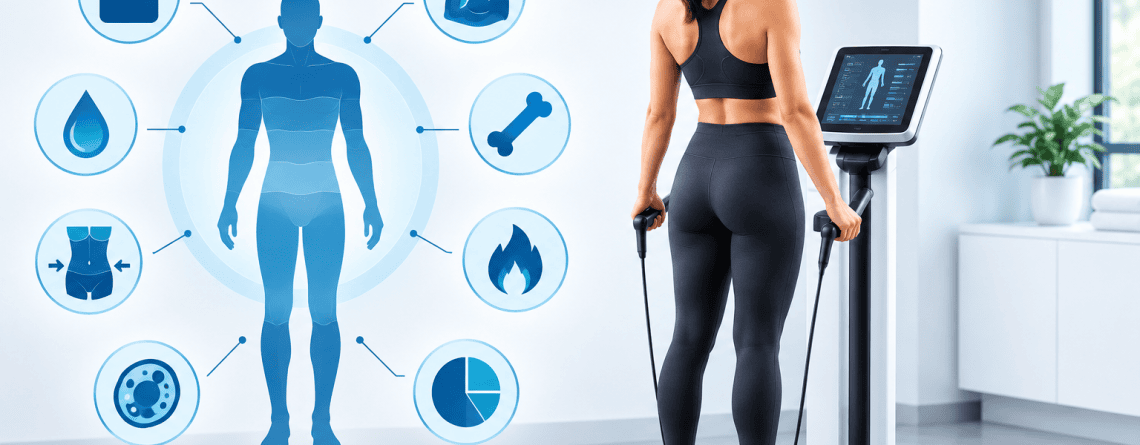
Body composition analysis measures far more than a number on a scale, breaking down your body into muscle mass, fat mass, water, and bone density to give a genuinely useful picture of health and fitness progress. For gym owners, personal trainers, and wellness clinic operators in Qatar considering an InBody machine for their facility, understanding exactly what this technology measures and how it compares to simpler tools like BMI is essential before making a purchasing decision. This guide explains the science, the equipment, and what it means for your business or personal fitness journey.
What Is Body Composition Analysis, Exactly?
Beyond the Bathroom Scale
What is body composition analysis at its core? It’s a method of breaking down total body weight into its component parts, rather than treating weight as a single undifferentiated number.
A comprehensive body composition analysis typically measures:
- Skeletal muscle mass — the amount of muscle tissue distributed across the body
- Body fat mass and percentage — how much of total weight is fat tissue
- Total body water — including both intracellular and extracellular water levels
- Visceral fat level — fat surrounding internal organs, linked to metabolic health risk
- Basal metabolic rate (BMR) — the energy the body burns at rest
This level of detail explains why gyms, clinics, and serious fitness enthusiasts have moved well beyond simple scale weight as a progress metric.
How Does InBody Scan Work?
The Technology Behind the Numbers
How does InBody scan work to produce such detailed results in under a minute? InBody devices use a technology called bioelectrical impedance analysis (BIA), sending a low, safe electrical current through the body and measuring how different tissues resist that current.
The process works because:
- Muscle tissue conducts electricity efficiently due to high water content
- Fat tissue resists electrical current more than muscle, allowing the device to differentiate between tissue types
- Multiple frequency currents are used across different body segments (arms, legs, trunk) for more accurate, segmental results
- Direct segmental measurement — unlike basic BIA scales, InBody measures each limb and the trunk separately rather than estimating from total body impedance
This segmental, multi-frequency approach is what separates clinical-grade InBody machines from consumer bathroom scales that also claim to measure body fat.
InBody Machine Qatar: What Facilities Are Adopting This Technology
Why Gyms and Clinics Are Investing
InBody machine Qatar adoption has grown significantly as gyms, personal training studios, and wellness clinics look for objective ways to demonstrate client progress beyond visual changes or scale weight.
Facilities benefit from InBody technology through:
- Client retention — visual, data-backed progress reports increase client engagement and renewal rates
- Differentiation from competitors — offering professional-grade body composition tracking sets a facility apart
- Program personalization — trainers can adjust training and nutrition plans based on precise muscle and fat distribution data
- Objective progress tracking — removing the frustration clients feel when scale weight doesn’t reflect visible physical changes
For gyms competing in Doha’s increasingly premium fitness market, this kind of data-driven service has become an expected feature rather than a luxury add-on.
Body Composition Analyzer for Gyms: Choosing the Right Model
Matching Equipment to Facility Needs
Selecting the right body composition analyzer for gyms depends on client volume, budget, and how deeply integrated you want the technology into your service offering.
Key considerations include:
- Scan speed and throughput — high-volume gyms need equipment that can process multiple clients efficiently during peak hours
- Report detail and client-facing design — some models generate simplified summaries, while others provide full clinical-grade breakdowns
- Integration with training software — whether the device connects with your existing client management or app ecosystem
- Staff training requirements — more advanced models may require dedicated training for accurate result interpretation
Working with an established InBody equipment supplier helps facility owners match the right model to their specific client base and budget.
InBody vs BMI: Why Precision Matters
The Limitations of BMI as a Health Metric
Understanding InBody vs BMI reveals why body composition analysis has become the preferred metric among fitness professionals and healthcare providers.
- BMI only uses height and weight — it cannot distinguish between muscle mass and fat mass
- Muscular individuals are often misclassified — athletes with high muscle mass frequently register as “overweight” or “obese” by BMI standards despite low body fat
- BMI ignores fat distribution — visceral fat, which carries greater health risk, isn’t captured by BMI at all
- Body composition analysis provides actionable detail — trainers and clients can target specific areas (muscle gain, fat loss) rather than chasing a single weight number
This distinction is precisely why serious fitness facilities have shifted client conversations away from BMI and toward comprehensive body composition data.
Benefits of InBody Testing for Personal Trainers
How Trainers Use This Data in Practice
The benefits of InBody testing for personal trainers extend well beyond simply having impressive equipment in the facility.
- Program design precision — trainers can identify whether a client needs to focus on muscle gain, fat loss, or both
- Client motivation — visible, measurable progress in muscle mass or reduced visceral fat keeps clients engaged even when scale weight plateaus
- Baseline risk identification — flagging elevated visceral fat levels that may warrant medical follow-up
- Credibility and professionalism — data-backed consultations position trainers as knowledgeable, evidence-based professionals
InBody for personal trainers has increasingly become a standard tool for building trust and demonstrating tangible results to clients.
Body Fat Analysis Equipment: Accuracy Considerations
What Affects Measurement Reliability
Like any body fat analysis equipment, InBody devices require proper usage conditions to deliver accurate, repeatable results.
Factors affecting accuracy include:
- Hydration status — significant dehydration or overhydration can skew water-dependent measurements
- Time of day — body water distribution shifts throughout the day, so consistent testing times improve tracking accuracy
- Recent exercise or food intake — testing immediately after intense exercise or a large meal can affect results
- Proper foot and hand contact — correct positioning on electrode plates is essential for accurate segmental readings
Educating clients on these factors helps facilities ensure the data they’re providing is genuinely useful for tracking progress over time.
Buy InBody Machine Qatar: What to Know Before Purchasing
Making a Confident Purchasing Decision
For facility owners ready to buy InBody machine Qatar equipment, a few practical steps make the process smoother.
- Request a live demonstration — seeing scan speed and report output firsthand helps set realistic expectations
- Confirm warranty and local support — clinical-grade equipment benefits significantly from local servicing availability
- Compare commercial vs consumer-facing report formats — some models are better suited to gyms, others to clinical settings
- Ask about staff training included with purchase — proper interpretation training maximizes the value of the investment
A trusted commercial body composition scanner supplier will walk through these considerations as part of the sales process, not leave you to figure them out after installation.
Frequently Asked Questions
What is body composition analysis and why does it matter more than scale weight? Body composition analysis breaks down total weight into muscle, fat, water, and bone, revealing whether weight changes reflect fat loss, muscle gain, or water fluctuation — information a scale alone cannot provide.
How does InBody scan work compared to other body fat measurement methods? InBody uses multi-frequency bioelectrical impedance analysis, sending electrical currents through the body to measure tissue resistance segmentally (arms, legs, trunk), offering more precision than single-frequency consumer scales.
Is InBody vs BMI accuracy really that different? Yes, significantly. BMI uses only height and weight, often misclassifying muscular individuals, while InBody directly measures muscle and fat separately, providing far more clinically relevant data.
Do I need special training to use an InBody machine in my gym? Basic scanning is straightforward, but accurately interpreting and explaining results to clients benefits from proper training, which reputable suppliers typically include with purchase.
How accurate is a body composition analyzer for gyms compared to clinical settings? Commercial-grade InBody machines used in gyms provide clinically validated accuracy when used correctly, though testing conditions (hydration, timing, positioning) affect results in both gym and clinical environments equally.
Final Thoughts
Body composition analysis offers gym owners, personal trainers, and wellness clinics a far more meaningful way to track client progress than scale weight or BMI alone. Whether you’re evaluating an InBody machine for your facility or simply curious what your own results mean, understanding the technology behind the numbers helps you make better decisions about fitness, health, and equipment investment.
Ready to explore InBody equipment for your facility? Get a personalized consultation and quote from Qatar’s trusted fitness equipment supplier.
Request Your Free Consultation →






LEAVE A COMMENT