
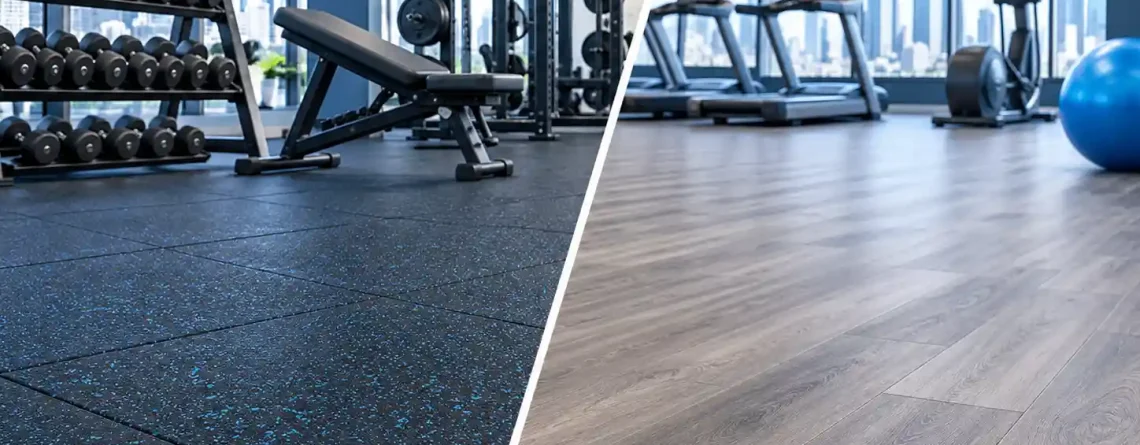
Rubber Flooring vs Vinyl Flooring for Gyms in Qatar: Which Is Better?
Rubber Flooring vs Vinyl Flooring is the first decision a gym owner in Qatar faces when planning a fitness space. The floor affects safety, noise, equipment life and running costs for years. A poor choice leads to cracked surfaces, damaged subfloors and unhappy members. A good choice protects your investment from day one.
This guide compares rubber flooring for gyms and vinyl flooring for gyms on durability, comfort, maintenance and cost. It also helps you choose the right commercial gym flooring Qatar operators rely on. Sports Village Qatar has supplied gyms, hotels and sports clubs since 2006.
Gym Flooring Comparison: Why the Right Floor Matters in Qatar
A gym flooring comparison in Qatar must account for local conditions. Most fitness centers run under constant air conditioning. Hotel gyms see guests from morning to night. Heavy equipment, sweat and humidity all stress the surface.
Your floor has to do four jobs at once:
- Absorb the impact of dropped weights and jumping
- Resist slipping when wet
- Protect the concrete slab beneath your equipment
- Look professional for members and guests
Neither material wins every test. The better choice depends on how each zone of your facility is used.
Rubber Flooring vs Vinyl Flooring: Quick Comparison
| Feature | Rubber | Vinyl |
| Impact protection | Excellent | Moderate |
| Heavy free weights | Ideal | Not recommended |
| Slip resistance | Very high | Good |
| Design variety | Limited colours | Wide range of finishes |
| Typical zone | Weights, functional training | Studios, cardio, hotel gyms |
Use this table as a starting point. The sections below explain each factor in more detail.
Rubber Flooring for Gyms: Strengths and Limits
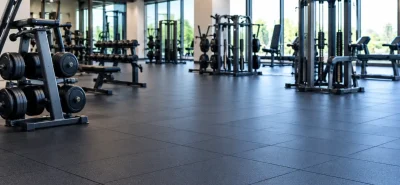
Rubber flooring for gyms is the industry standard for strength areas. Dense rubber compresses under load and recovers its shape. It also dampens noise, which matters in hotels and apartment buildings.
In the Rubber Flooring vs Vinyl Flooring debate, rubber wins wherever weights are dropped.
Key strengths:
- Outstanding shock absorption and noise reduction
- Strong grip, even when damp with sweat
- Long service life under heavy commercial traffic
Limits to consider:
- New rubber can carry a mild odour that fades with ventilation
- Colour and pattern choices are narrower
- The upfront cost is usually higher than vinyl
Rubber Gym Floor Tiles vs Rolls
Rubber gym floor tiles suit small zones and areas you may reconfigure later. A damaged tile can be replaced on its own. Rolls give fewer seams and a cleaner look across large cardio or functional areas. Browse the full commercial gym flooring range in Qatar to compare thicknesses and formats.
Vinyl Gym Flooring Benefits and Drawbacks
The vinyl gym flooring benefits are mostly about appearance, hygiene and cost. Vinyl comes in many colours, wood-look and stone-look finishes. That makes it popular for boutique studios, yoga rooms and hotel fitness suites.
Main benefits:
- Smooth, seamless surface that wipes clean quickly
- Wide design choice to match your branding
- Lighter weight and often a lower upfront price
- Comfortable underfoot for stretching and group classes
Main drawbacks:
- Less cushioning than rubber
- Can dent or tear under dropped dumbbells or sharp equipment legs
- Needs a properly prepared, level subfloor
Vinyl works well where foot traffic and light equipment dominate. It is a poor fit for a free-weight area.
Rubber Flooring vs Vinyl Flooring for Durability and Safety
Durability is where the two materials differ most. For durable gym flooring solutions, rubber handles repeated heavy impact with little visible wear. Vinyl performs well under foot traffic but can show damage faster when loads are concentrated.
Shock Absorbing Gym Flooring and Joint Protection
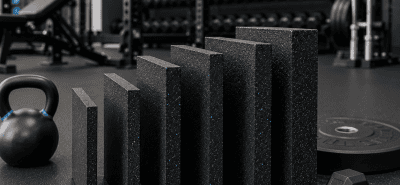
Shock absorbing gym flooring protects people as well as slabs. Softer, thicker rubber reduces strain on knees and joints during HIIT, plyometrics and long cardio sessions. Thicker rubber also protects your concrete and equipment frames from vibration.
Safety also depends on grip. Both materials can be specified with slip-resistant surfaces. Rubber generally keeps its traction better when sweat or moisture is present. Always confirm the slip rating for the specific product you choose.
Rubber Flooring vs Vinyl Flooring Maintenance in Qatar’s Climate
Both floors are easy to maintain with the right routine:
- Sweep or vacuum daily to remove grit
- Damp-mop with a neutral cleaner
- Avoid harsh solvents that can degrade the surface
- Wipe up spills promptly
Vinyl’s seamless finish is slightly faster to clean. Rubber tolerates heavier cleaning and hides marks better. In air-conditioned Qatari facilities, both perform reliably when installed on a dry, level base.
Best Flooring for Fitness Centers: Rubber Flooring vs Vinyl Flooring by Zone
The best flooring for fitness centers is rarely a single material. Most successful facilities combine both.
- Free-weight and strength zone: rubber, for impact protection
- Functional and HIIT area: rubber, for grip and shock absorption
- Cardio floor: rubber or vinyl, depending on noise and design goals
- Studios, yoga and Pilates rooms: vinyl, for comfort and aesthetics
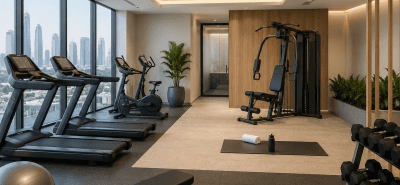
- Hotel gym and reception areas: vinyl, for a polished look
Mixing materials by zone controls cost without compromising safety.
Gym Flooring Installation in Qatar: What to Expect
Good gym flooring installation Qatar work starts with the subfloor. The slab should be clean, dry and level. Poor preparation causes lifting, gaps and uneven wear, whichever material you choose.
A professional installation usually covers:
- Site survey and moisture check
- Layout planning around equipment positions
- Precise cutting, fitting and adhesive application
- Final inspection and handover
Sports Village Qatar represents flooring brands such as Paviflex. Our team also plans layouts through our free 3D gym design service for commercial clients. We are ISO 9001:2015 certified and have delivered projects for hotels, universities and fitness clubs across Qatar.
Frequently Asked Questions
What is the main difference in Rubber Flooring vs Vinyl Flooring for gyms?
Rubber is denser and absorbs impact better, so it suits weights and functional training. Vinyl is smoother and more design-flexible, so it suits studios and light-use areas.
Which flooring lasts longer in a commercial gym?
Rubber generally lasts longer under heavy equipment and dropped weights. Vinyl can last well in low-impact areas with proper care.
Can I use both in the same gym?
Yes. Many gyms use rubber in strength zones and vinyl in studios and reception areas.
Is rubber flooring too noisy or smelly for hotel gyms?
Rubber actually reduces noise. Any initial odour fades with ventilation, and it is manageable in well-ventilated hotel facilities.
How thick should gym flooring be?
It depends on the activity. Free-weight zones need thicker rubber, while studio areas can use thinner vinyl or rubber. A supplier can recommend thickness for your equipment and layout.
Final Thoughts
Rubber Flooring vs Vinyl Flooring is not about one winner. Choose rubber where impact, weight and noise are concerns. Choose vinyl where appearance and comfort lead. For most Qatar gyms, a zoned combination gives the best durability, safety and value.
Need help choosing the right floor? Our team can recommend, supply and install it.
Request a Free Flooring Quote →
Sports Village Qatar
Building No 86, Street 340, Zone 39, near Jarir Book Store, Ramada Signal, Salwa Road, Doha, Qatar
Email: info@sportsvillageqatar.com





LEAVE A COMMENT